

Furniture Website Design: Bringing S.H. Bean Bags Closer to Customers
You can zoom into a photograph until the stitching fills your screen. You still can’t tell your phone, “Move over. Let me sit.”
That is the challenge of selling furniture online.
In a showroom, people press the fabric, look around the product and try the seat. On a website, they have to imagine those things from whatever we give them.
When we built the S.H. Bean Bags website at Spidrly, we started with that gap. How could technology help customers explore a touch-and-feel product before visiting or making an enquiry?
Our answer shaped the entire website: an immersive introduction, a practical catalogue and an easy way to ask questions.
A closer look, one scroll at a time
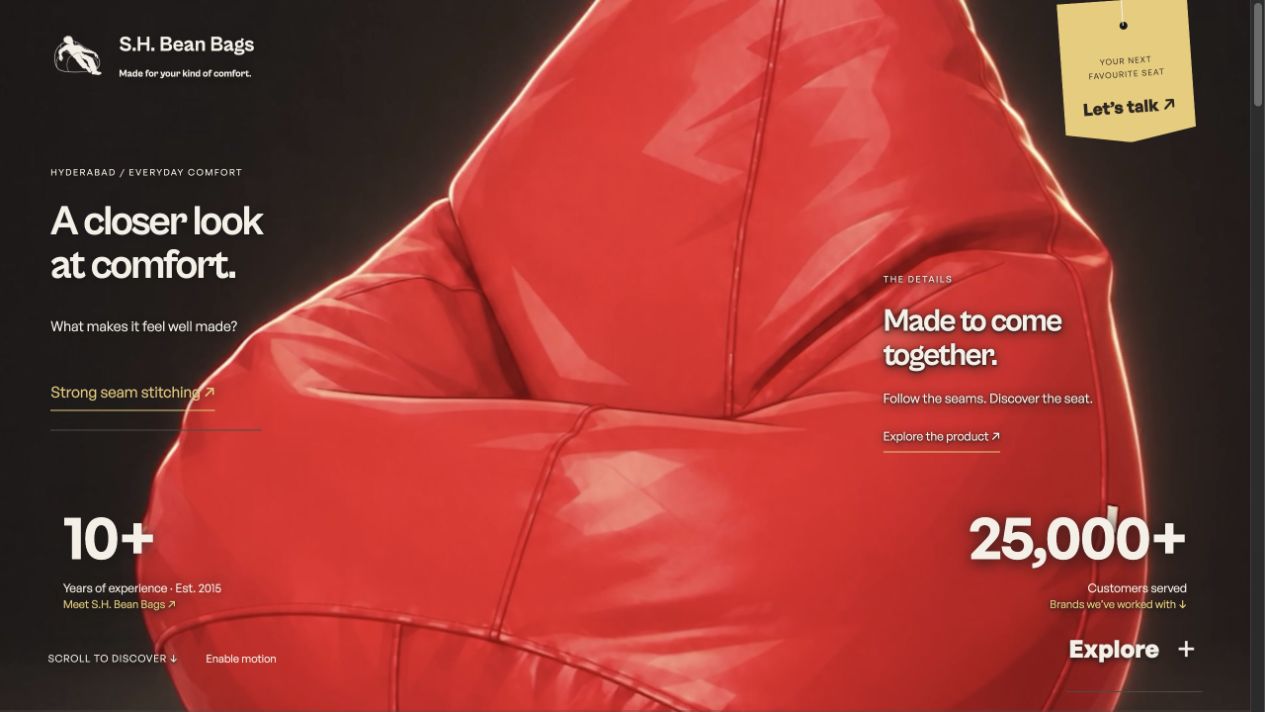
The homepage opens with an immersive product overview. As visitors scroll, the presentation draws attention to the bean bag and its details, with labels explaining what they are seeing.
A stitching detail, for example, becomes more useful when the page tells you what to notice.
We brought this experience together using video, CSS layouts and JavaScript interactions. The development work connects scrolling with the presentation, labels and navigation, giving customers a guided way to explore.
The purpose is simple. Help someone move beyond “that looks nice” towards “now I understand what I’m looking at.”
A screen cannot replace trying the seat. It can make the first look more informative.
An expressive design with room to breathe
An immersive homepage needs restraint. Too many messages and moving elements can pull attention away from the very product they are meant to introduce.
We gave the bean bag the leading role, supported by short copy, clear labels and carefully placed controls. The Explore menu keeps routes to the collection, business information, FAQs and contact within reach.
Behind that layout, we used HTML, CSS and vanilla JavaScript to build a custom static website. A Python build process generates pages from shared templates and product information, helping keep repeated elements consistent across the site.
That matters when an address, navigation link or shared section needs updating. Consistent structure makes the website easier to maintain as the business changes.
An enquiry option before the moment passes
Sometimes a customer doesn’t need another page. They need an answer.
“Is this available in another colour?”
“Can I enquire about seating for an event?”
“Which option should I look at?”
We placed an enquiry tag on the first screen and added routes to contact where they are useful throughout the browsing experience.
The tag gives the opening design a practical next step. Someone can enjoy the product overview and start a conversation without first working out where the contact information lives.
We also developed a browser-based enquiry flow that prepares a WhatsApp message from the information the visitor enters. Customers can review the message before choosing to open WhatsApp and send it.
The website helps them explain their requirement, while keeping that final action in their hands.
A catalogue for the “let me check another one” stage
Furniture shopping rarely follows a straight line.
You like one shape. Then another colour catches your attention. You go back to the first option and wonder whether it would work better in the corner beside the window.
The catalogue needed to make that kind of browsing comfortable.
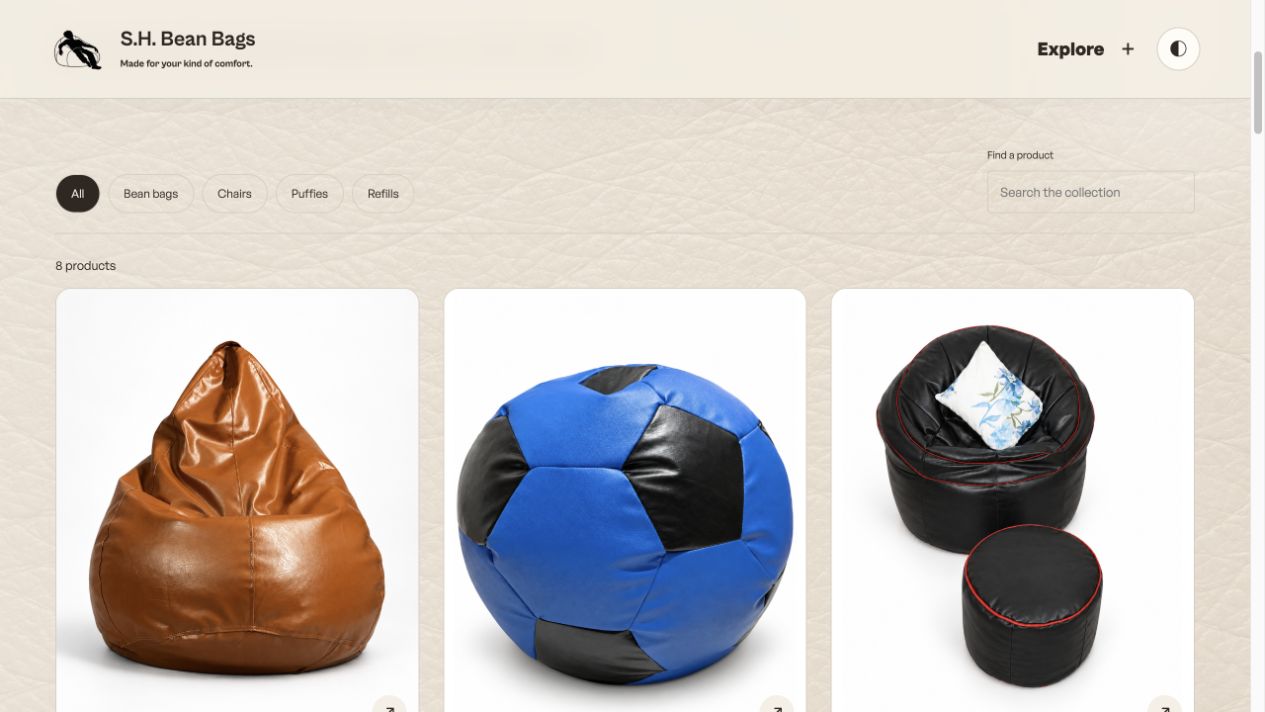
We built product pages, colour selections linked to images, and searchable, filterable catalogue behaviour. Size and care information supports the visual presentation, giving visitors practical details as they consider their options.
JavaScript handles the interactive parts, while the page layout keeps the products and information organized.
The homepage creates curiosity. The catalogue gives that curiosity somewhere useful to go.
Light and dark themes that carry through the design
Someone might browse during a lunch break on a bright screen. Someone else might open the same website beside them on the sofa at night.
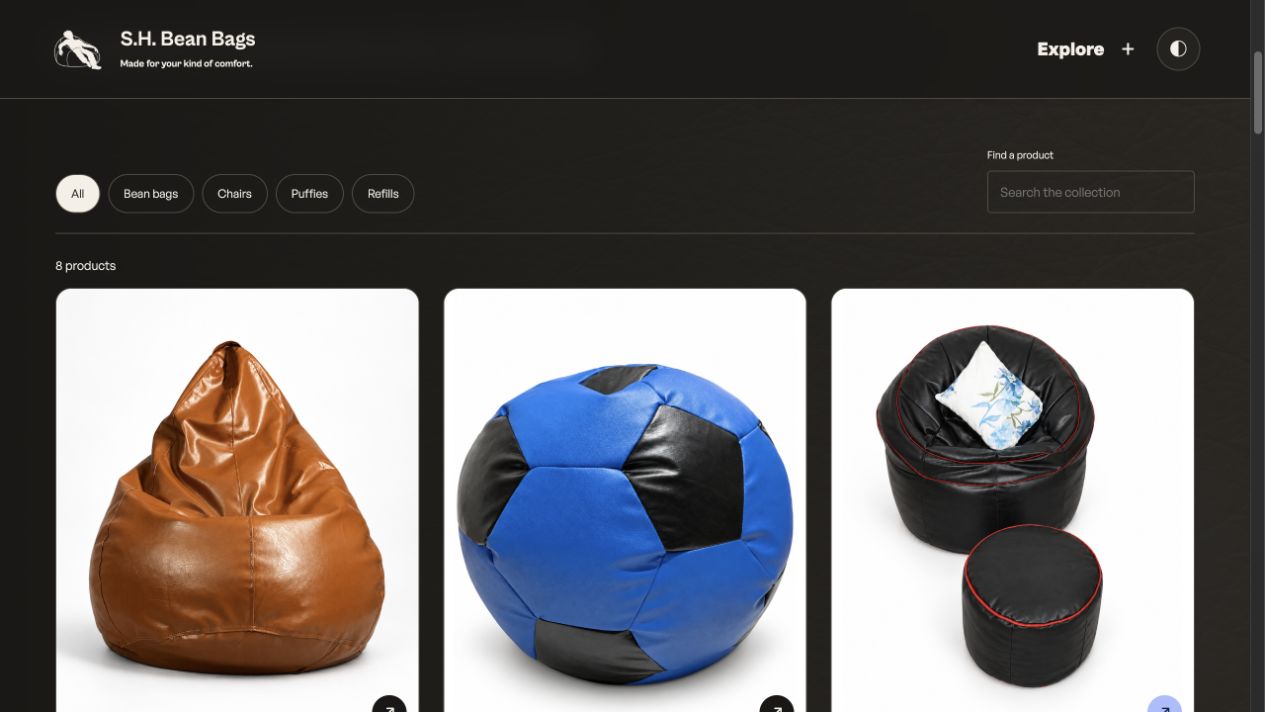
We included light and dark themes to give visitors a choice.
Making that choice work took more than changing the background. We adjusted text contrast, logo treatments, cards and controls so the design remained readable across both appearances.
Responsive CSS also adapts the layout to different screen sizes. Navigation, images and enquiry controls need to fit the space available without making customers struggle to use them.
These decisions bring the idea of comfort into the interface itself.
The small fixes behind the finished experience
Some development problems only become obvious when you start interacting with a page.
During the build, the moving brand carousel needed corrections to its scrolling and touch behaviour. We refined its movement, adjusted how it pauses and added compatibility fallbacks.
We also checked page layouts, links, images and headings across the 22-page build. Keyboard access, visible focus states, motion controls and reduced-motion handling were part of the implementation.
These checks informed the fixes, although they do not amount to testing every physical device and browser.
It is easy to overlook this work in a project story. Yet a customer may notice a stubborn control long before they notice a carefully chosen colour.
Both deserve attention.
Technology with a reason to be there
The S.H. Bean Bags website brings several development decisions together around one customer journey.
Video and labelled interactions help introduce the product. The catalogue supports exploration. Responsive layouts and theme choices make the presentation more adaptable. The enquiry flow helps turn a question into a conversation.
That is the thinking behind our furniture website design work: understand what the customer needs to see, know and do, then build the experience around it.
Explore the finished S.H. Bean Bags website.
You still have to sit down to know how a seat feels. But getting to know it can begin with a scroll.
Screenshots captured from shbeanbags.in on 16 October 2026. Product imagery and business claims shown belong to S.H. Bean Bags.